
Battery energy storage in Yellowstone County |
Exploring energy storage facility options and lithium-ion battery system technology |
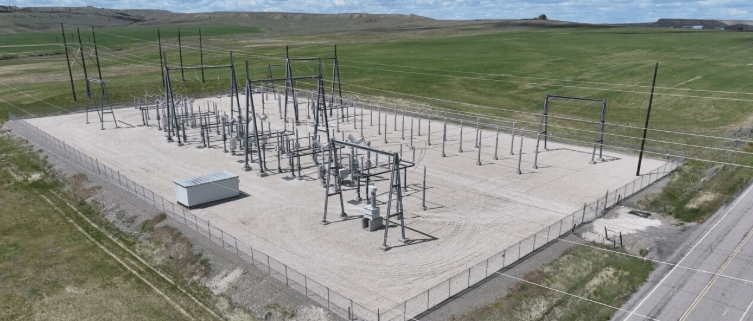
Yellowstone County is poised to enhance its energy infrastructure with the introduction of a new battery energy storage facility.
Representatives from NextEra Energy recently presented plans for the McFarland Energy Storage Project to county commissioners.
This proposed facility, spanning approximately 10 acres, is slated for development near the NorthWestern Energy substation on Shorey Road, roughly 10 miles northwest of Billings.
The project aims to bolster the region's electric grid reliability and address the escalating energy demands driven by large-scale developments.
Commissioner Mark Morse noted that the initiative is in its preliminary stages, with operations anticipated around 2030.
He emphasized that the company is currently exploring land options and has no immediate construction plans.
In a statement, NextEra Energy highlighted the project's goal to provide cost-effective energy solutions during peak demand periods.
The facility is expected to integrate with the existing NorthWestern Energy substation, potentially involving high-voltage transmission lines between local substations.
Justice Graham, CEO of YellowBall Roofing and Solar in Billings, explained that such energy storage facilities typically utilize large lithium-ion battery systems housed in container-like structures.
These systems store electricity during low-demand periods and release it back to the grid when demand surges, thereby reducing strain on the grid.
Graham also pointed out the financial benefits, as stored energy can be sold during peak demand, offering economic opportunities.
However, he acknowledged potential concerns regarding the conversion of agricultural land for energy infrastructure.
He reassured that modern lithium-ion battery systems are designed with safety in mind, mitigating risks associated with spillage or fires.
While the McFarland project is still in the planning phase, it reflects a broader trend in Montana's energy sector.
For instance, the Glacier Battery System near Cut Bank, a 75-megawatt facility, began operations in late 2025, marking the state's first utility-scale battery storage project.
As Montana's population grows and energy demands increase, such energy storage facilities are becoming integral to ensuring a stable and reliable power supply.
Projects like the McFarland Energy Storage Project signify a proactive approach to meeting future energy needs while supporting the state's economic development. |
0 Comments
Join the conversation
Be the first to comment
Share your thoughts above.